
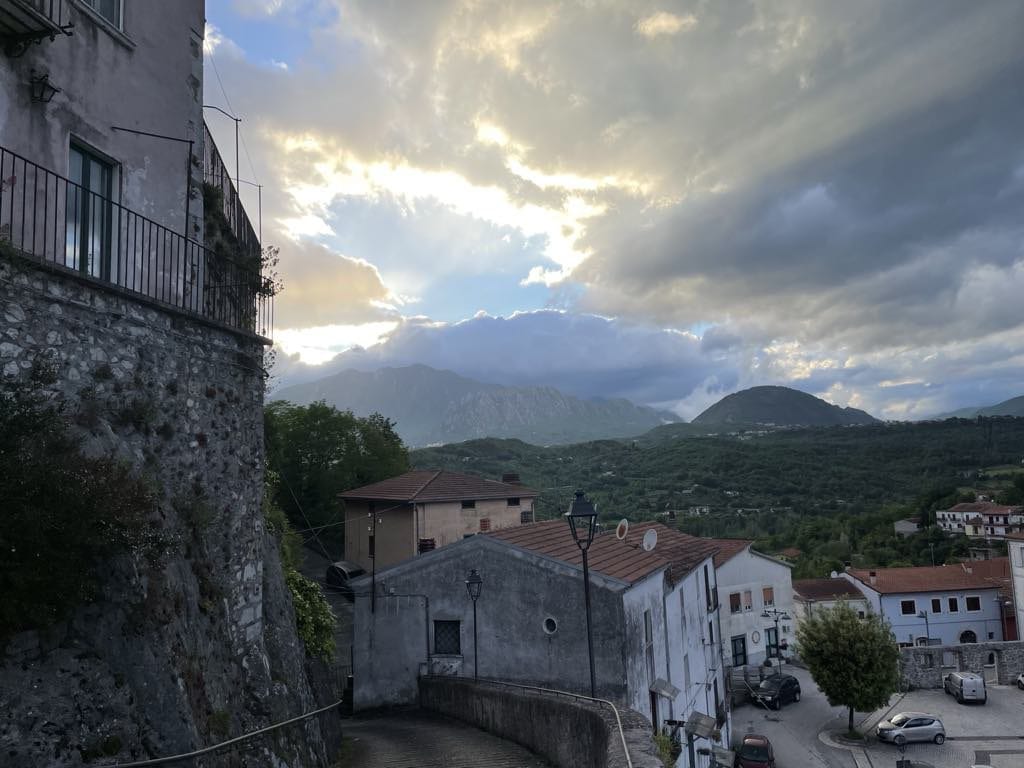
Molise has 136 municipalities (comuni). This month Mootilda maps Colli a Volturno, where water, stone, and story meet.
Tucked into the western edge of Molise, near the headwaters of the Volturno River and beneath the watch of the Mainarde mountains, Colli a Volturno is the kind of place that rewards curiosity. It is a comune of layered histories: Samnite echoes, medieval stone streets, mountain air, and a pace of life that still makes room for long conversations over coffee. For travelers seeking a quieter Molise, one rooted in landscape, heritage, and genuine local hospitality, Colli offers both a compelling base and a destination in its own right.
Location & Physical Geography
Colli a Volturno sits in the province of Isernia in western Molise, close to the borders of Lazio and Abruzzo. Its location makes it a strategic gateway between regions while still feeling distinctly tucked away from Italy’s more traveled routes.
The town rises approximately 550 meters (1,800 feet) above sea level in the Volturno Valley, shaped by three distinct hills: Monte Cervaro, a beautiful hiking area; Monte La Falconara, home to the historic center; and Monte San Paolo, where the hills still preserve traces of ancient Samnite polygonal fortifications, reminders of the Italic peoples who inhabited and defended this territory before Roman expansion.
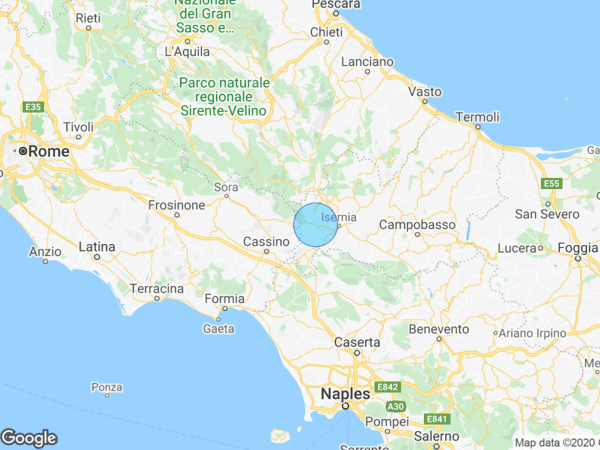
The landscape here is dramatic without feeling severe, creating one of Molise’s most compelling combinations of mountain, water, and panoramic views that shift with the seasons. The nearby Mainarde mountain range, part of the central Apennines, frames the horizon, while the Volturno River, Italy’s longest river south of Rome, has its origins nearby. This geography has shaped everything from agriculture and seasonal migration to recreation and community identity.
Historical Overview
Like much of this corner of Molise, Colli a Volturno carries the imprint of multiple civilizations.
The broader region was once part of Samnite territory, home to the ancient Italic peoples who resisted Roman expansion. Later, Roman influence spread through the valley, though the settlement that became modern Colli took shape more clearly during the medieval period, thanks largely to the Benedictine monks of the monastery of San Vincenzo al Volturno at the end of the 10th century, who formed what was then known as Collis Sancti Angeli.
Its elevated position was practical as much as picturesque, offering visibility and defense in uncertain centuries. The historic center still reflects that legacy, with narrow stone lanes and architectural traces that hint at its long evolution.
Part of the province of Terra di Lavoro (with its capital at Caserta) after the Napoleonic reforms, it officially took the name Colli a Volturno in 1863 and a year later became part of the region of Abruzzi e Molise. It remained so until the separation of Molise from Abruzzo in 1963, becoming part of the province of Isernia in 1970.
Colli also played a notable role during the Second World War. Owing to its strategic position near the Mainarde and the Gustav Line, the town became the headquarters of the American Eighth Army during operations against German forces entrenched in the surrounding mountains. It was visited by General Dwight D. Eisenhower and King Vittorio Emanuele III of Italy. On March 26, 1944, Colli hosted a historic meeting between French General Charles de Gaulle and Italian General Umberto Utili, marking the transfer of the northern sector of the Gustav Line from the French Expeditionary Corps to the Italian Liberation Corps, which had its headquarters in Colli’s historic center.
Like many Molisan communities, Colli also carries the story of migration. Generations left in search of work and opportunity, especially in the late 19th and 20th centuries, creating family ties that now stretch across continents.
What to See & Do
- Wander the Historic Center
- Locals have affectionately referred to Colli as the “Paris of Molise,” a nickname that speaks to village pride and is probably related to the high fashion shops that were located there in past years. Colli’s historic center invites the kind of wandering that rewards slowness. Stone facades, quiet lanes, and unexpected viewpoints create a sense of discovery around each corner.
- Locals have affectionately referred to Colli as the “Paris of Molise,” a nickname that speaks to village pride and is probably related to the high fashion shops that were located there in past years. Colli’s historic center invites the kind of wandering that rewards slowness. Stone facades, quiet lanes, and unexpected viewpoints create a sense of discovery around each corner.
- Church of Santa Maria Assunta
- The Chiesa di Santa Maria Assunta stands as Colli’s most significant religious landmark. Built atop one of the town’s central hills and dating back to the early 11th century, the church reflects centuries of community devotion and architectural evolution. Its elevated placement reinforces the spiritual and visual prominence it has long held in village life.
- The Chiesa di Santa Maria Assunta stands as Colli’s most significant religious landmark. Built atop one of the town’s central hills and dating back to the early 11th century, the church reflects centuries of community devotion and architectural evolution. Its elevated placement reinforces the spiritual and visual prominence it has long held in village life.
- River Adventures & Outdoor Exploration
For nature lovers and active travelers, Colli offers remarkable access to Molise’s outdoor landscapes.- The Volturno River corridor creates opportunities for riverside walking, nature immersion, and water-based recreation, while the surrounding mountains invite hiking, cycling, and panoramic exploration.
- For adventure seekers, Molisè Rafting offers rafting, kayaking, and guided outdoor experiences that showcase this region’s wilder side in a way many international visitors never expect from Molise.
- The area is also home to the Colli a Volturno Fishing Sports Association, which manages all fishing activities and works to protect the brown trout.
- Explore the Wider Volturno Valley
Colli makes an excellent base for discovering nearby treasures, from the abbey of San Vincenzo al Volturno to neighboring mountain villages and natural areas.
- The Volturno River corridor creates opportunities for riverside walking, nature immersion, and water-based recreation, while the surrounding mountains invite hiking, cycling, and panoramic exploration.
Traditions
Colli’s most important annual event is the Fair of San Leonardo on November 6, a longstanding celebration of the town’s patron saint and history of regional exchange that continues to reflect the social rhythms that once defined village life across inland southern Italy.
Tastes
The cuisine of Colli reflects inland Molise’s pastoral identity: hearty, resourceful, and deeply regional.
Notable specialties include:
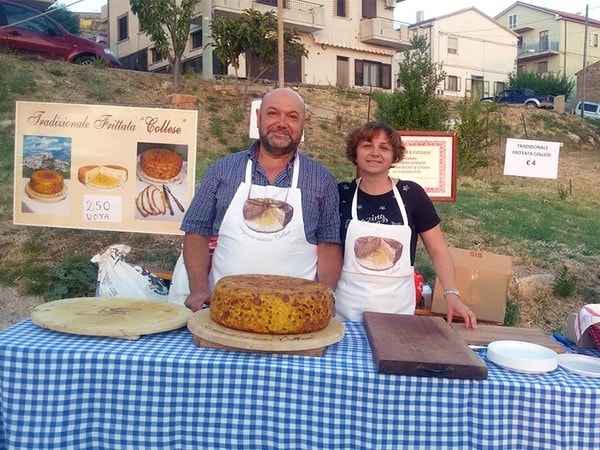
- Frittata Collese, one of the town’s signature dishes, traditionally made during the Easter period with at least 100 eggs (or even 250 eggs)!
- Abbuòti, rolls of lamb or goat offal
- Pallotte cacio e ova, balls of egg & cheese
Restaurant Recommendations
- Pizzeria La Canonica
A reliable local favorite for casual dining and fantastic pizza. - Café de Paris
A charming café and pastry shop located in Colli a Volturno’s Piazza Municipio, renowned for its exquisite cannoli and delightful pastries. - Il Dollaro
A cozy local bar and a good spot for burgers, community, and music.
Mootilda’s Take 🐄
Colli feels like one of those places that quietly rearranges your nervous system. Mountain air, moving water, stone underfoot, and just enough stillness to remember what unhurried life can feel like.
References
- Turismo in Molise. (n.d.). Colli a Volturno.
https://turismoinmolise.com/colli-a-volturno/ - GuideSlow (n.d.). Colli a Volturno.
https://molise.guideslow.it/colli-a-volturno/ - Visit Molise. (n.d.). Colli a Volturno. https://www.visitmolise.eu/scheda-localita/-/d/dms/1563289/colli-a-volturno
- Wikipedia contributors. (n.d.). Colli a Volturno.
https://it.wikipedia.org/wiki/Colli_a_Volturno