
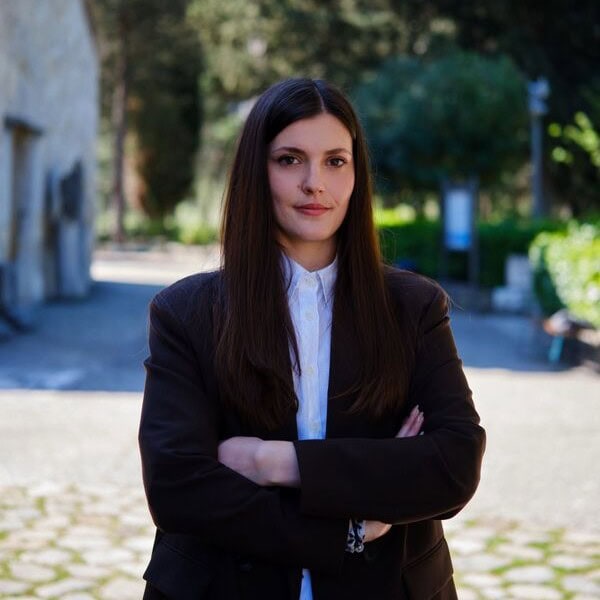
Each month we will share perspectives on Molise from those who live it and love it. This month we chatted with Elisabetta Porfirio.
Elisabetta works remotely as a Research Assistant for the University of Münster (Germany), specializing in international projects and cross-border cultural exchange networks. Driven by a deep commitment to her roots, she has returned to her hometown of Roccavivara, where she serves as a local administrator, blending her international academic background with community development and cultural opportunities.
Molise IS; what IS Molise to you?
Molise represents authenticity. It is a place where traditions, community, history, and landscape remain deeply connected. In a world that often moves very quickly, Molise preserves a sense of identity and human connection that is increasingly rare. It is a region of extraordinary beauty, but above all it is a place of genuine people, strong roots, and a quality of life centered on relationships and belonging. For me, Molise is not simply a geographic region; it is a way of understanding community, heritage, and the value of staying connected to one’s origins while welcoming others to discover them.
What is your favorite thing about Molise?
My favorite thing about Molise is its authenticity. It is a place where traditions are still part of everyday life, where people know and support one another, and where the relationship between communities and the landscape remains strong. I also love the balance that Molise provides. Within a relatively small area, you can find mountains, forests, rolling hills, and the sea. There is a slower pace of life that allows people to enjoy meaningful relationships and appreciate the beauty of everyday moments.
What is a challenge facing Molise and/or Roccavivara?
One of the main challenges facing Molise today is demographic decline. Many small towns and villages, including Roccavivara, have experienced a steady loss of population over the years, especially among younger generations. This is largely due to limited local employment opportunities and the tendency for young people to move to larger cities or other regions in Italy and abroad to pursue their studies and careers. This phenomenon has a direct impact on community life. Schools risk having fewer students, local services become harder to maintain, and some traditional activities and associations struggle to continue with the same energy.
Another challenge is the perception of marginality. Molise is often overlooked in national discussions, which can make it harder to attract investment, infrastructure development, and long-term strategic planning. This can create a cycle where fewer opportunities lead to further emigration.
Tell readers about your specific context/life in Molise.
I was born and raised in Molise, and my childhood in Roccavivara was happy, rich, and full of meaningful experiences. I believe that growing up in a small village is an incredible gift for children: it offers freedom, a strong sense of community, and close contact with nature and local traditions.
I attended high school in Termoli, commuting every day and willingly making the journey home despite the sacrifices it required. Later, I moved to other regions of Italy to continue my studies, gaining valuable experiences and a broader perspective. Still, I always felt deeply connected to my hometown, and eventually I chose to return, where I now work remotely.
Just a few days ago, following an important electoral victory, I was appointed to the municipal administration of my village as a council member. I am proud to have the opportunity to serve my community and contribute to its future. My commitment is to help this small village grow, create new opportunities for young people, strengthen connections with the wider world, and build bridges that can bring fresh ideas and new possibilities to future generations.
What is your top recommendation to visit in Molise?
I would recommend visiting the Sanctuary of Santa Maria di Canneto in Roccavivara. Surrounded by nature and rich in history, it is one of the region’s most significant religious and cultural landmarks.
More broadly, the town of Agnone, known for its centuries-old bell foundry, is another must-see destination. I would recommend visiting both the inland villages and the coastal town of Termoli, as they offer two complementary sides of the region. Termoli is one of the most vibrant destinations in Molise. Its historic old town, with narrow streets overlooking the Adriatic Sea, creates a unique atmosphere where history and daily life blend naturally. The castle, the seafront, and the fishing tradition give the town a strong identity, while still offering a lively and welcoming environment for visitors.
Is there one piece of advice Molise has taught you or embodied for you?
Molise has taught me the value of patience, resilience, and authenticity. Growing up in a small region like this means learning early that progress often takes time, and that meaningful change is built step by step, through consistency and care rather than immediacy.
In particular, living in and being deeply connected to Roccavivara has taught me the importance of community. In small places, relationships matter deeply: people support each other in everyday life, and this sense of mutual responsibility becomes a guiding principle not only socially, but also personally and professionally.