
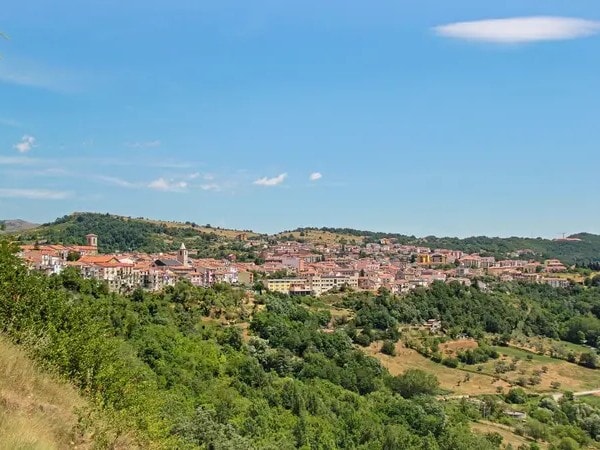
Molise has 136 municipalities (comuni). This month Mootilda maps Agnone, where craft, fire, & tradition endure.
High in the mountains of northern Molise, Agnone is a town shaped by fire, metal, and generations of skilled hands. Known around the world for its centuries-old bell making tradition and spectacular winter ‘Ndocciata, Agnone is also a paese artigiano—a town of artisans—where copper workshops, ancient churches, stone streets, and traces of Venetian influence tell the story of a community that has long made things meant to endure. Surrounded by the wooded landscapes of Alto Molise, Agnone rewards visitors who look beyond its famous bells to discover a town where craftsmanship is not simply heritage, but identity.
Location & Physical Geography
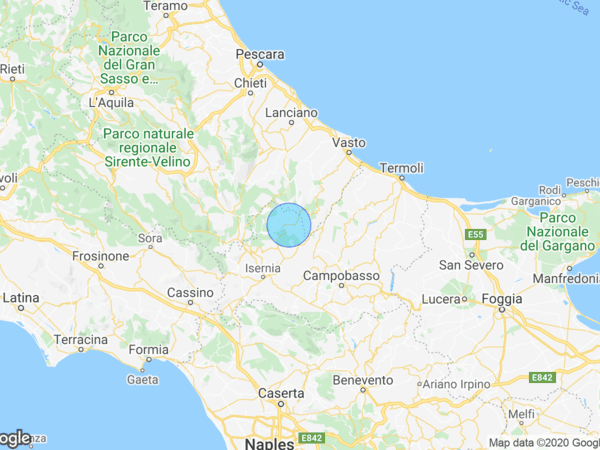
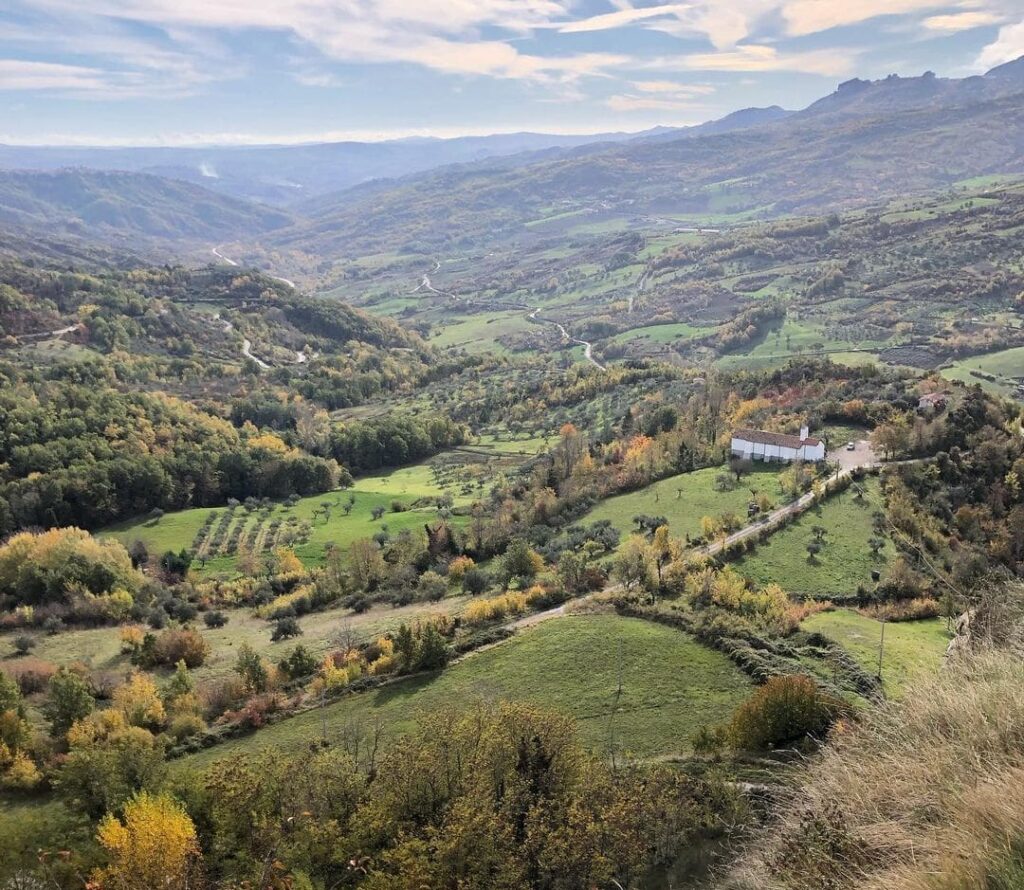
Agnone sits in the province of Isernia in Alto Molise, the mountainous northern reaches of the region near the border with Abruzzo. At roughly 830 meters (2,720 feet) above sea level, the town occupies a ridge surrounded by forests, pastures, and the rolling peaks of the central Apennines.
Below the historic center runs the Verrino River, whose waters once played an essential role in Agnone’s development. Water-powered mills and machinery along the river helped sustain the town’s copperworking industry, while the surrounding forests supplied resources for generations of craftspeople.
This landscape is also part of the historic world of transhumance, the seasonal movement of livestock between mountain pastures and the warmer plains of Puglia. Those movements connected Agnone economically and culturally to communities far beyond Molise and helped its artisans find markets for the objects they produced.
Historical Overview
Agnone lies at the heart of ancient Samnite territory, and archaeological discoveries throughout the surrounding area testify to the importance of this part of the Apennines long before the emergence of the modern town. Among the most famous is the Oscan Tablet, or Tabula Osca, a third-century BCE bronze inscription discovered near Agnone in 1848 and now housed in the British Museum. Written in Oscan, it provides an extraordinary surviving record of Samnite language and religious practice.
The town’s distinctive identity took clearer shape during the Middle Ages. By the late 11th century, Agnone was among the principal fortified settlements of the vast territory controlled by the Borrello family. Tradition holds that in the 12th century the Borrellos brought soldiers and artisans connected to Venice and its Adriatic territories to Agnone. Their influence remains particularly visible in La Ripa, the oldest part of town, sometimes known as the borgo veneziano, where architectural details—including representations of the Lion of Saint Mark—evoke that connection.
Agnone continued to grow in importance under Angevin and Aragonese rule and later became one of the royal cities of the Bourbon Kingdom of the Two Sicilies, answering directly to the Crown rather than to a feudal lord. In 1811, after centuries of association with Abruzzo Citeriore, Agnone became part of Molise.
By then, craftsmanship had made the town an important manufacturing center. Coppersmiths, goldsmiths, ironworkers, bellmakers, and other artisans built an economy remarkable for a mountain community of its size. Historical records document 171 copper workshops in Agnone in 1753 alone, illustrating the extraordinary scale of an industry that continued to shape the town into the 20th century.
Emigration and industrialization eventually transformed that economy, particularly as inexpensive aluminum displaced traditional copperware after World War II. Yet Agnone’s artisan identity survived. Today, workshops, archives, museums, and craftspeople continue to preserve knowledge handed down across generations.
What to See & Do
- Explore the Historic Center & Venetian Quarter
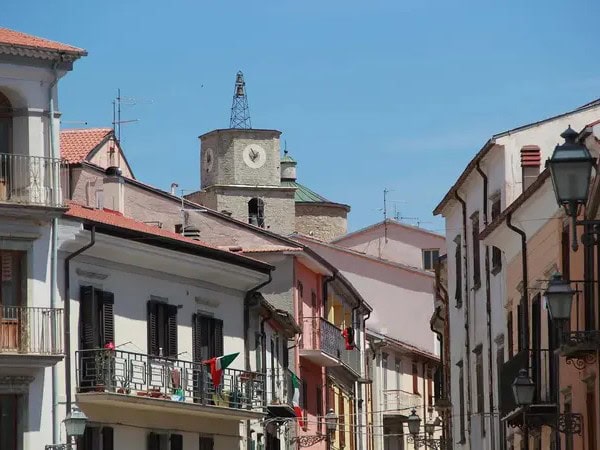
- Agnone is best discovered on foot. Corso Vittorio Emanuele and the streets branching from it lead past historic palazzi, artisan workshops, churches, stone portals, and small piazzas, while the older Ripa district preserves some of the town’s strongest Venetian influences.
Look closely at the architecture: carved stone, lions, balconies, doorways, and workshops make wandering here as rewarding as visiting any single monument.
- Agnone is best discovered on foot. Corso Vittorio Emanuele and the streets branching from it lead past historic palazzi, artisan workshops, churches, stone portals, and small piazzas, while the older Ripa district preserves some of the town’s strongest Venetian influences.
- Hear the Story of the Pontificia Fonderia Marinelli
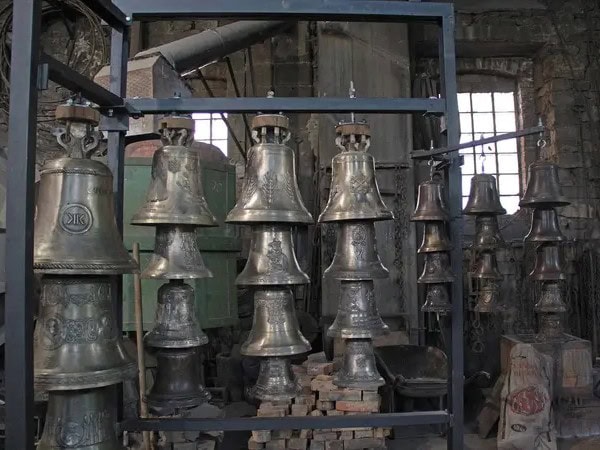
- No visit to Agnone is complete without the Pontificia Fonderia Marinelli, the historic bell foundry operated by generations of the Marinelli family and regarded as one of the world’s oldest family businesses.
Visitors can discover the painstaking process of casting bells—a marriage of mathematics, metallurgy, art, music, and faith—and explore the adjoining Museo Internazionale della Campana, where centuries of bell making history come together. Marinelli bells have traveled from this small Molisan mountain town to churches and institutions around the world.
- No visit to Agnone is complete without the Pontificia Fonderia Marinelli, the historic bell foundry operated by generations of the Marinelli family and regarded as one of the world’s oldest family businesses.
- Discover Agnone’s Copperworking Heritage
- Bells may be Agnone’s most internationally recognized craft, but copper once filled the town with workshops.
At La Ramera, visitors can encounter the Gerbasi family’s centuries-old copperworking tradition and see cookware and household objects made using techniques passed through generations. The story continues downhill in the Verrino Valley, where historic river-powered foundries recall the period when copper production was central to Agnone’s economy.
Traditional Agnonese copperware included the trmaun, a vessel traditionally used to carry and store water. Copper was also particularly practical for shepherds participating in transhumance because their cooking vessels could be relatively lightweight and durable.
- Bells may be Agnone’s most internationally recognized craft, but copper once filled the town with workshops.
- Step Inside Agnone’s Churches
- Agnone’s remarkable concentration of historic churches has contributed to its reputation as a Città d’Arte.
The Church of San Marco Evangelista, closely associated with Agnone’s Venetian heritage, contains a Renaissance portal and works of considerable artistic importance. Sant’Emidio preserves a 12th-century portal and religious artworks, while San Francesco features a striking rose window dating to 1330. The Church of San Nicola is immediately recognizable by its distinctive bell tower decorated with yellow and green ceramic tiles.
Together, Agnone’s churches reveal how art, faith, craftsmanship, and civic identity have intertwined here for centuries.
- Agnone’s remarkable concentration of historic churches has contributed to its reputation as a Città d’Arte.
- Follow the Verrino
- A trip into the Verrino Valley offers a different perspective on Agnone. Walking and natural areas along the river reveal the landscape that once powered mills and copper foundries and sustained the town’s artisan economy.
It is a particularly compelling way to understand that Agnone’s craftsmanship did not develop separately from its environment: water, forests, animals, migration routes, and human ingenuity all worked together.
- A trip into the Verrino Valley offers a different perspective on Agnone. Walking and natural areas along the river reveal the landscape that once powered mills and copper foundries and sustained the town’s artisan economy.
Traditions
The ‘Ndocciata
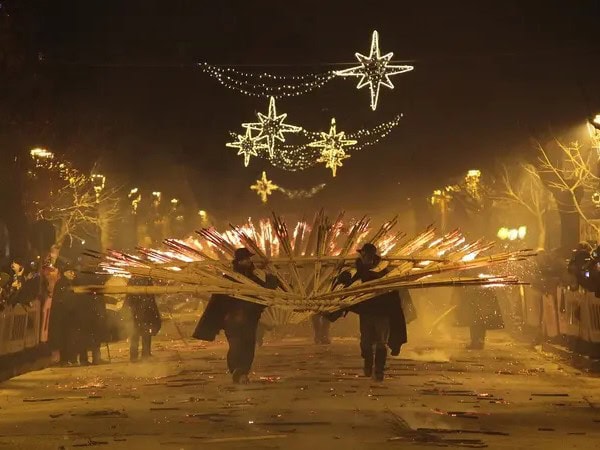
Nothing expresses Agnone’s relationship with tradition and fire quite like the ‘Ndocciata, one of Italy’s most spectacular Christmas rituals.
Held in December, the procession brings hundreds of ‘ndocciatori through the streets carrying enormous handmade torches constructed from silver fir and dried broom. Individual torches can reach two or three meters in height, while multiple torches may be joined into fan-shaped structures carried on a single person’s shoulders.
The tradition has roots in the rural communities surrounding Agnone, where torches once provided light and warmth to people traveling from the countryside toward town. Over generations, those practical flames evolved into an extraordinary communal ritual.
Today, torchbearers representing Agnone’s contrade process through town in traditional capes as bells, bagpipes, voices, and fire fill the streets. The celebration culminates in Piazza Plebiscito with the Falò della Fratellanza, or Bonfire of Brotherhood—a communal act of gathering around the flames and symbolically leaving behind what should not be carried into the year ahead.
Tastes
Agnone’s food reflects its mountain landscape, pastoral history, and generations of transhumance.
Perhaps its best-known product is caciocavallo, the stretched-curd cheese closely associated with Alto Molise and the pastoral traditions of the Apennines. That tradition remains very much alive at Caseificio Di Nucci, where the Di Nucci family has produced cheese for generations, preserving techniques and knowledge rooted in the area’s transhumant culture. Alongside caciocavallo, their cheeses offer visitors a delicious way to experience the connection between Agnone’s pastures, livestock, and centuries-old dairy traditions.
Cacicavallo can be eaten at different stages of aging or transformed into one of the region’s great exercises in beautiful simplicity: caciocavallo impiccato, suspended near an open flame until its surface melts and is scraped onto toasted bread.
Other flavors to look for include:
- Pallotte cacio e ova, savory balls of cheese and egg
- Handmade pastas and hearty sauces
- Lamb and other dishes rooted in pastoral traditions
- Local salumi and cheeses
- Soups, legumes, and seasonal mountain vegetables
- Traditional sweets and pastries, particularly during holidays and festivals
And in Agnone, food and craftsmanship sometimes meet at the table itself: traditional copper cookware remains both a beautiful expression of local artistry and an exceptionally functional tool for cooking.
Where to Eat & Drink
Agnone offers plenty of opportunities to experience its food culture beyond traditional dishes—from pizza and regional cooking to bakeries, pastry shops, and the cafés where daily life unfolds.
- Terra Mia
A wonderful choice for experiencing the flavors of Molise through thoughtfully prepared regional cuisine. - La Panonda
A welcoming local favorite with a varied menu, but come hungry for the pizza—it is especially worth seeking out. - Ciaccus
A great stop for casual food and drinks in the heart of Agnone, with the convivial atmosphere that makes an evening out feel distinctly local. - Feni’s Bar
A neighborhood bar worth visiting for coffee, drinks, and a glimpse of everyday Agnonese life. - Panificio Briciole di Bontà
One of Agnone’s local bakeries, perfect for picking up fresh bread, baked goods, and something to snack on while exploring town. - Patriarca Antonino
For bread, this is one of the places we would send you. A reminder that in Molise, something as seemingly simple as a loaf of bread can carry generations of craft. - Dolciaria Labbate Mazziotta
A stop for Agnone’s sweeter side, with traditional pastries and baked specialties that reflect the town’s longstanding confectionery traditions. - Nuovo Caffè Letterario
A café and gathering place where coffee and conversation come together—a lovely spot to slow down and simply spend some time in Agnone.
Something Especially Interesting
- A Paese Artigiano
- Agnone’s defining story may be less about any single monument than about the sheer concentration of knowledge held in human hands.
For centuries, this was a community of bellmakers, coppersmiths, goldsmiths, ironworkers, and other craftspeople. Their skills passed through families and workshops, creating an economy and culture unusual even among Italy’s celebrated artisan towns.
In an age of disposable objects and mass production, Agnone offers something increasingly rare: a living argument for making things carefully, repairing them, passing them down, and understanding the people and places behind them.
- Agnone’s defining story may be less about any single monument than about the sheer concentration of knowledge held in human hands.
- The Athens of the Sannio
- Agnone has also been called the “Athens of the Sannio,” reflecting the extraordinary archaeological and cultural heritage of the surrounding Samnite territory. The Tabula Osca is perhaps its most famous artifact, but it belongs to a much larger landscape of ancient settlements, sacred places, and archaeological remains scattered across Alto Molise.
Mootilda’s Take 🐄
For a little while, we had the privilege of calling Agnone home. We came to know its streets and rhythms, and more importantly, many of its people—and they remain close to our hearts today. Agnone is celebrated for the things its people have made for centuries: bells, copper, cheese, bread, traditions. But our favorite thing Agnone makes might be something less tangible: room for people to belong.
References
- Italy Segreta. (2022). Agnone: The copper capital of Italy is Molise’s paese artigiano. Italy Segreta article
- Turismo in Molise. (n.d.). Turismo in Molise
- Visit Agnone. (n.d.). Visit Agnone. Visit Agnone
- Wikipedia contributors. (n.d.). Wikipedia, The Free Encyclopedia. English article
- Wikipedia contributors. (n.d.). Wikipedia, L’enciclopedia libera. Italian article