
Food is never just food.
Behind every plate is a network of choices and relationships: the land where ingredients are grown, the people who produce them, generations of accumulated knowledge, changing technologies, transportation and supply chains, restaurants and markets, consumer preferences, and the economic realities that determine which traditions survive.
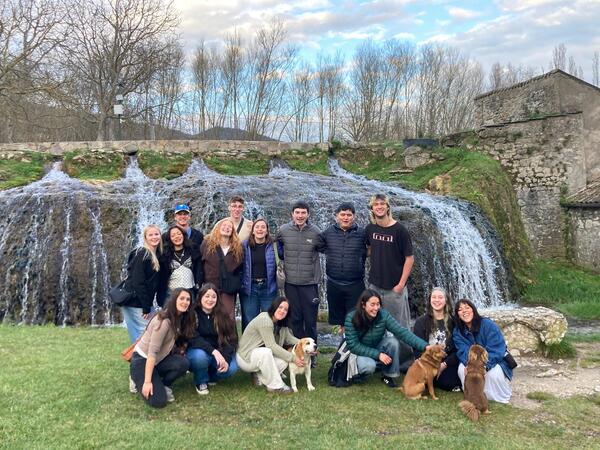
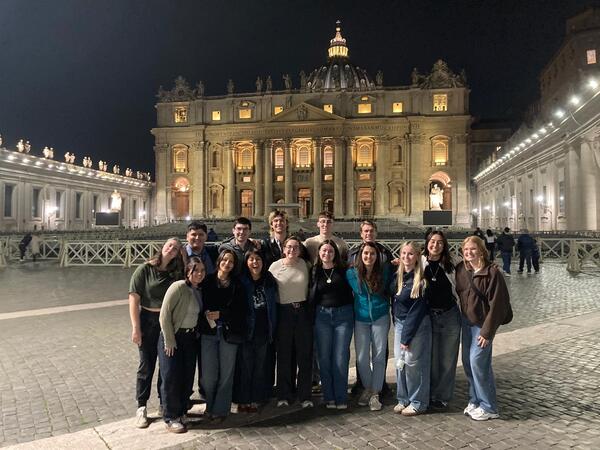
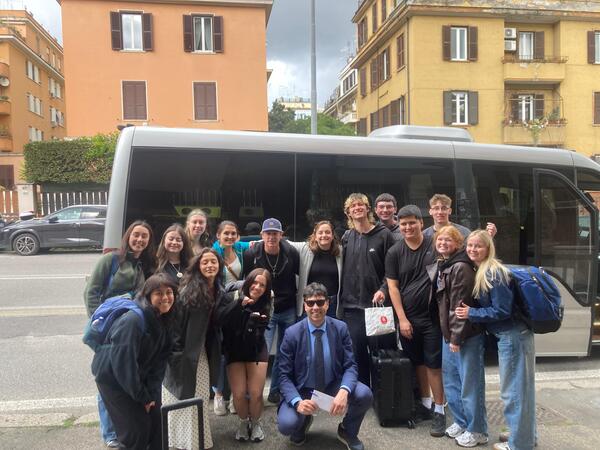
This spring, fourteen students from Northern Arizona University’s W. A. Franke College of Business traveled with Professor McKenzie Cassens to Italy for an eight-night Economics of Gastronomy faculty-led program designed to explore those connections firsthand. Moving from Rome into Agnone, Campobasso, and Termoli, students encountered gastronomy not simply as cuisine, but as an economic system shaped by place, culture, labor, sustainability, and community.
And, naturally, they ate very well along the way.
From Ingredients to Enterprise
The learning began almost as soon as the group arrived in Rome, where their first dinner included an introduction to the history and traditions of Roman cuisine. Familiar dishes such as cacio e pepe, carbonara, amatriciana, and gricia provided an early opportunity to consider how relatively simple combinations of seasonal ingredients became enduring expressions of regional identity.
But it was in Molise that students began tracing those relationships more deeply.
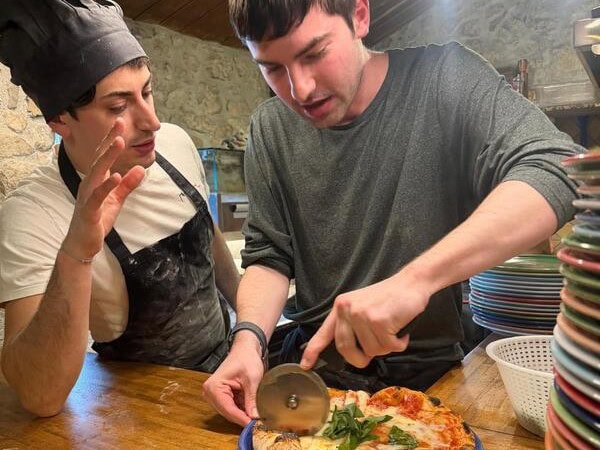
Their first stop was Bas & Co in Pesche, where a hands-on pizza-making experience introduced a production philosophy that begins long before dough enters the oven—with the selection of grains, milling of flour, slow fermentation, and careful sourcing of artisanal and locally rooted ingredients. After making (and eating) their own pizza, students continued into the mountains of Alto Molise and Agnone.
There, one day became a study in how traditional knowledge can continue to create economic value in a changing world.
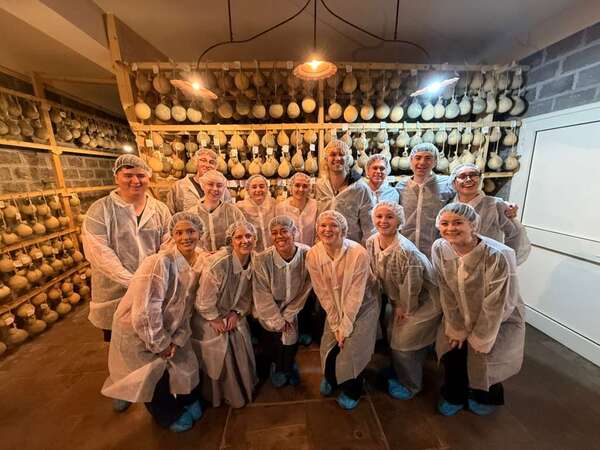
At Caseificio Di Nucci, students entered the artisanal laboratory to see how caciocavallo di Agnone, scamorza, stracciata, and other cheeses are produced before exploring the family’s Museum of Cheesemaking and Transhumance and tasting the results. A lesson in sustainable baking followed at Panificio Pasticceria Alto Molise, while a stop at Caffè Letterario used one of Italy’s most recognizable products—espresso—to explore the relationship between consumption, ritual, identity, and social life.
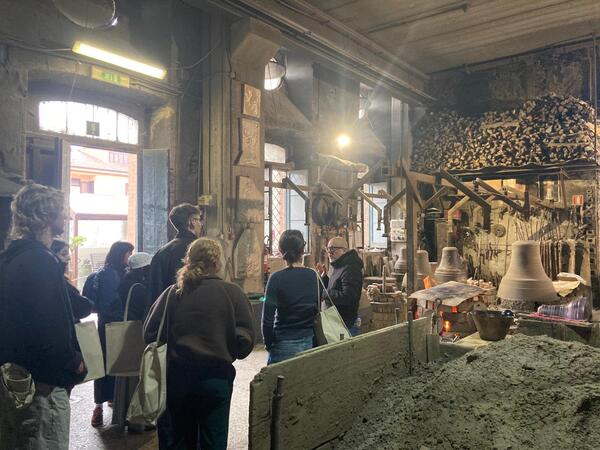
The day even extended beyond food. At the Pontificia Fonderia di Campane Marinelli, students encountered another family enterprise where specialized knowledge has been transmitted across generations. The centuries-old bell foundry offered a parallel question central to the program: how do traditional businesses preserve cultural heritage while remaining economically relevant in the present?
Following Food Back to the Landscape
As the group traveled toward Campobasso, the focus moved closer to the land itself.
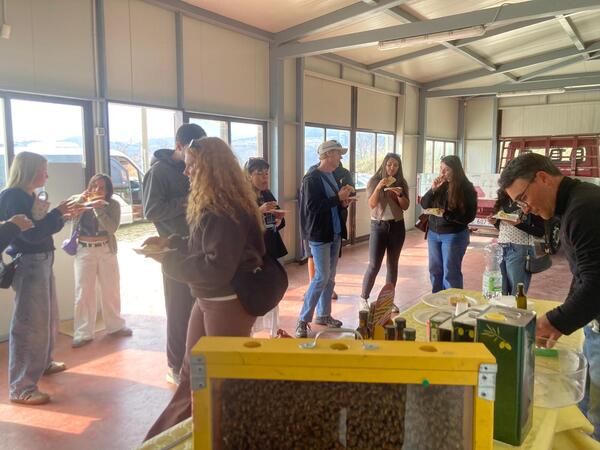
Beekeeper Fabio Battista introduced students to apiculture and honey production among the valleys and wild plants of Molise, alongside a lesson on another cornerstone of the region’s agricultural economy: olive oil. In Santa Maria del Molise, students discussed local ingredients and ancient recipes over lunch at Il Laghetto before visiting the historic water mills that once harnessed local streams to grind grain.
The following day offered two very different perspectives on how natural resources become valuable food products.
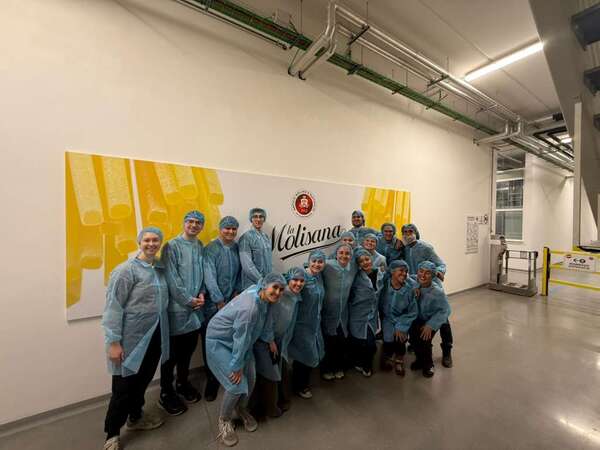
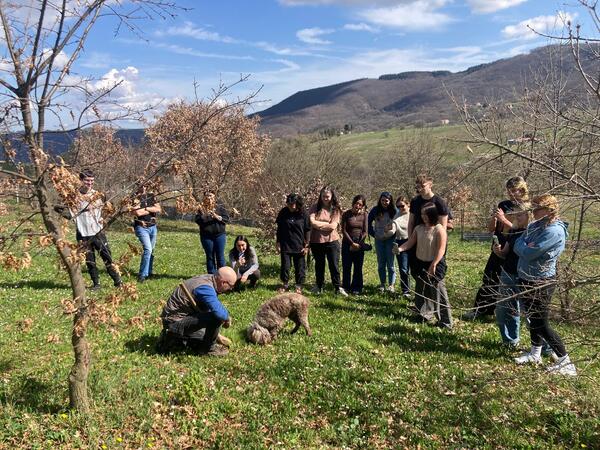
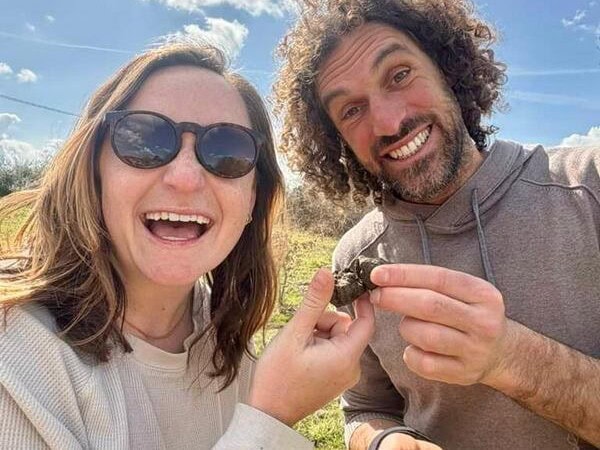
In the forests around Busso, students joined Di Iorio Tartufi for a truffle hunt and lunch, learning about one of Molise’s most prized natural resources and the traditions surrounding its harvest. Later that afternoon, they visited La Molisana, where the scale shifted dramatically—from searching the forest floor with trained dogs to seeing how a major pasta producer transforms Italian durum wheat and spring water into a product distributed far beyond the region.
That contrast is part of what makes Molise such an extraordinary classroom. Within a single day, students can encounter a highly localized tradition recognized as intangible cultural heritage and a modern integrated supply chain—two very different economic models, both rooted in food and place.
Even dinner became part of the curriculum. At La Grotta di Zi’ Concetta in Campobasso, dishes such as pizza e minestra, pallotte cacio e ova, and pasta e ceci accompanied a discussion of cucina povera and the influence of historically inexpensive “poor man’s dishes” on cuisine far beyond Molise.
What was once food born of necessity can become heritage, identity, and even economic opportunity.
Tradition, Adaptation, and the Value of Place
The journey toward the Adriatic continued that conversation.
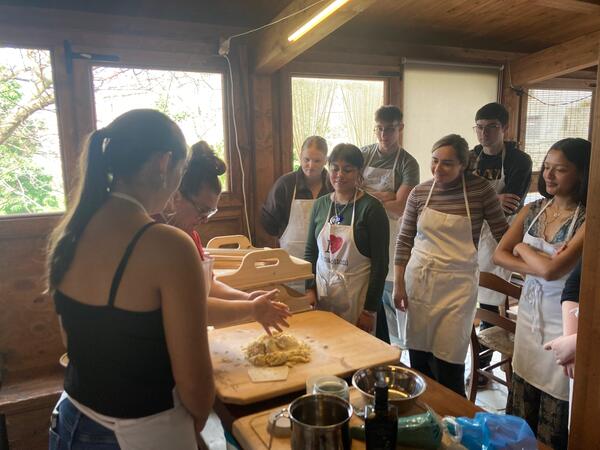
In Ripabottoni, students stepped into the kitchen at Home Restaurant Nonna Maria for an intimate pasta-making class and lunch centered on local flavors. In Casacalenda, they encountered a different kind of local development through Kalenarte MAACK, an open-air art project that reimagines overlooked spaces through art and architecture, alongside a brief visit to BioSapori, which processes fresh organic produce grown in Molise.
Then came Tintilia.
At family-run Cantine D’Uva, students explored the planting, harvesting, and cultivation of grapes and other agricultural products before sitting down to a tasting-menu dinner. The vineyard provided a particularly compelling case study in the economics of regional identity: Tintilia, Molise’s indigenous black grape, had once been abandoned by many growers because of its low productivity and risked disappearing before producers began reinvesting in it as a distinctive, high-quality regional wine.
In that story lies one of the program’s larger questions: What makes something valuable?
Yield? Efficiency? Scarcity? Quality? History? A connection to a particular place?
Sometimes preserving tradition and creating economic opportunity are not competing goals at all.
From the Adriatic to the Plate
Termoli brought the journey full circle.
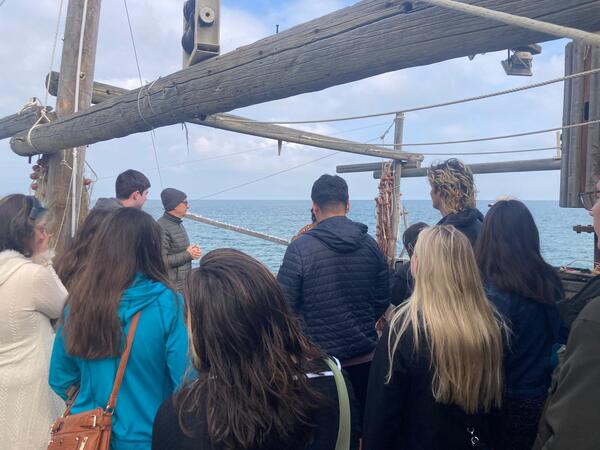
Alongside local guide Fiorenza Grilli of Turismol, students explored the city’s maritime heritage and visited a traditional trabucco, an ingenious wooden fishing structure designed to harvest from the sea without requiring fishermen to venture offshore. They then boarded a working fishing vessel with Captain Basso Cannarsa, who introduced them to the equipment, labor, technology, and changing realities of a fisherman’s life from the postwar period to the present.
From there, the catch moved toward the kitchen.
At Pesce Nostrum, students learned about local fish before working alongside a chef to prepare traditional Termoli recipes and, finally, sitting down to eat them.
In the span of a morning, they had followed seafood through an entire local system: ecosystem, tradition, technology, labor, harvest, preparation, and plate.
And that may be the best expression of what the Economics of Gastronomy program is designed to do.
Learning With All Five Senses
Of course, there is another important part of studying gastronomy in Italy:
It is a lot of fun.
Students made pizza and fresh pasta with their own hands. They hunted for truffles in the forests of Molise. They tasted artisan cheeses, honey, olive oil, wine, and seafood. They wandered the stone streets of Pesche and Agnone, explored Campobasso, experienced life along the Adriatic in Termoli, and finished the program with free time in Rome—and, for anyone still hungry, recommendations for an informal tour of the city’s gelaterias.
Those experiences aren’t separate from the academic learning. They are part of it.
Taste something made by the person standing beside you, and “local production” becomes more than an economic term. Walk through a vineyard while discussing the survival of an indigenous grape, and questions about agricultural productivity become tangible. Board a fishing boat and speak with the people whose livelihoods depend upon the Adriatic, and a supply chain suddenly has faces.
That is the power of experiential education: ideas become places, people, tastes, conversations, and memories.
Partners
None of this happens without the people willing to turn their workplaces and communities into classrooms.
Throughout the program, farmers, beekeepers, pizzaioli, cheesemakers, bakers, restaurateurs, truffle hunters, winemakers, fishermen, chefs, artisans, guides, and business owners welcomed students into their worlds—not simply to demonstrate what they do, but to explain the knowledge, decisions, challenges, and traditions behind it.
We are especially grateful to Andrea Rossi, Molise Italian Studies’ on-site support coordinator, who accompanied the group throughout the program. With an itinerary moving through four cities and dozens of experiences in only eight nights, Andrea provides the constant thread—helping participants navigate language, culture, logistics, and the countless small moments that turn an itinerary into an experience.
By the end of eight days, students had encountered food at nearly every point in its economic life—from soil, pasture, hive, vineyard, forest, and sea to artisan workshop, factory, restaurant, market, and table.
What emerges is a different understanding of gastronomy: not simply as something we consume, but as a system of relationships connecting people, place, culture, labor, and economy.
Sound like something your students would like to experience? Email us or visit our Faculty-Led page.
And it’s not just for university students. Want us to set up an Adult Study Abroad with this itinerary? We can’t wait to hear from you!