
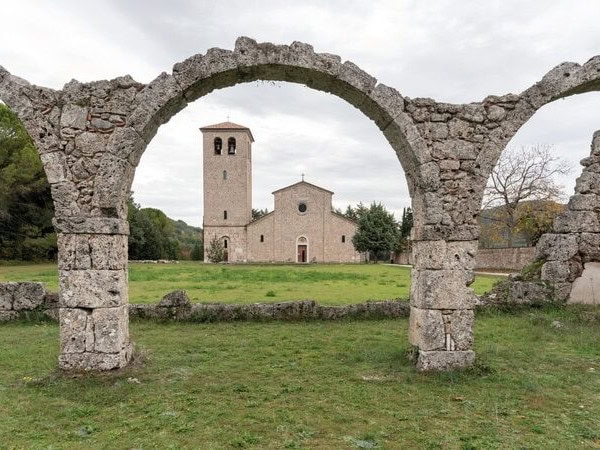
Translated and adapted with permission from an article by Simona Carracillo on Guideslow, with photos by Sisto Bucci, Paolo Pasquale, and Pino Manocchio
The Middle Ages, and especially the Early Middle Ages, evoke dark and gloomy atmospheres, permeated by superstition, fear, and oppression. However, by peeling back this veil of negativity, one discovers an era of extraordinary vitality, marked by fruitful cultural exchanges, great ideas that enlightened minds, and art that flowed with great skill and technical knowledge. Politics itself took on innovative contours, with forms of government and social organizations structured according to respect for work and humanity.
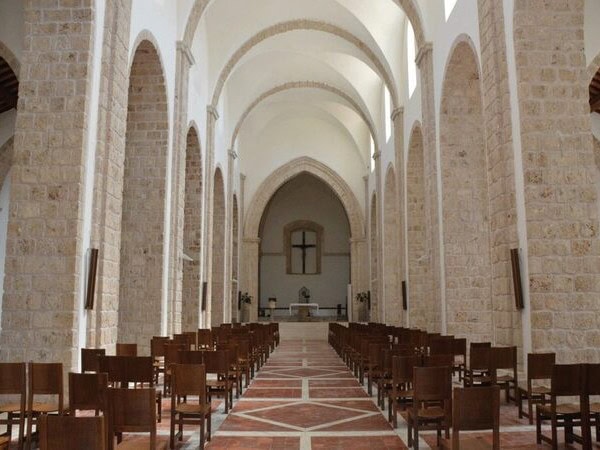
It was during this period, between the 8th and 9th centuries, that Charlemagne created a Europe ante litteram. Of all the historical disciplines, the one best able to help us fully understand the grandeur of this era is certainly archaeology; among the various early medieval archaeological sites discovered, one of the most significant is undoubtedly that of San Vincenzo al Volturno. Considered one of the most impressive in all of Europe, so much so that it has been included in the UNESCO nomination process, it preserves the intact plan of a monastery from the time of Charlemagne and preserves material culture, evidenced by a collection of artifacts dating back to the 8th and 11th centuries, the largest in the world.
Founded around 703 by three Benevento nobles and under the aegis of the Lombard dukes, the monastery quickly acquired great prestige and fame, but it was only with the arrival of the Franks that it was projected into the much broader context of the Holy Roman Empire. San Vincenzo, designated an imperial monastery, was fully integrated into the Carolingian political organization, which considered such institutions to be extremely important hubs of economic, social, cultural, and religious power, effectively making them places of great wealth with vast properties and territorial appurtenances. This was the pinnacle of the growth of what had by then become a true monastic city with hundreds of Benedictine monks and buildings of extraordinary beauty intended for prayer, work, and study.
The peak of this ascent, however, suffered an initial abrupt halt in 881 when a Saracen attack, orchestrated by the Duke and Bishop of Naples, Athanasius II, brought the monastery to the brink of collapse. Hundreds of brothers were massacred, while looting and fires reduced the sacred site to desolation, forcing the survivors to flee. Returning to Castel San Vincenzo only around 920, in significantly smaller numbers, the monks devoted themselves to the partial reconstruction of their structures but soon decided to abandon the original site altogether, opting to build a new monastery of significantly smaller dimensions on the opposite bank of the Volturno River, in what is now known as “San Vincenzo Nuovo”.
After this abandonment, oblivion and nature reclaimed the remains of what was once an illustrious center known and inhabited by great and noble abbots, intellectuals, theologians, and saints. Only many centuries later, in the early 1980s and thanks to the research of Professor Richard Hodges, did the first remains of San Vincenzo al Volturno resurface. Numerous churches, refectories, guesthouses, cloisters, and kitchens, along with richly decorated rooms, once again become tangible evidence of this place’s great history. Hundreds of artifacts (worked glass, jewelry, sculptures, epigraphs, mosaics, marble and ceramic floors) represent the fruit of the skilled craftsmanship of the monks, workers, and master craftsmen who dedicatedly worked in the monastic workshops and laboratories.
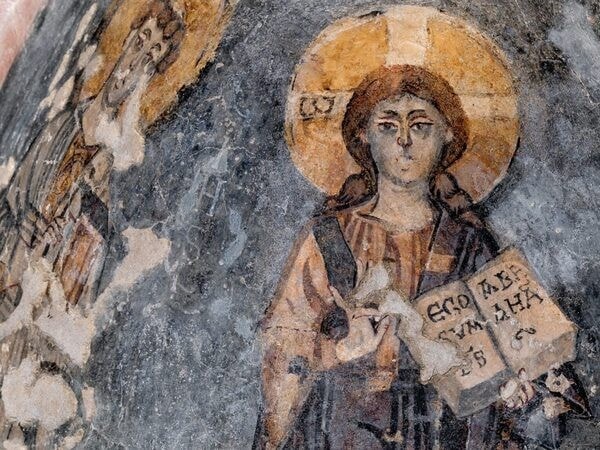
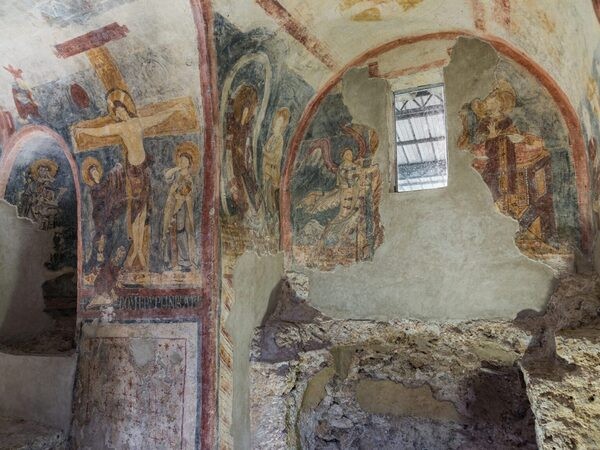
Of all the unearthed wonders, the most remarkable is undoubtedly the Crypt of Epiphanius, which remains a sacred place intact in its architecture and pictorial decoration. Discovered by chance by a farmer in 1832, it is now owned by the Cassinese monks, who, for a certain period in history, assumed ownership of San Vincenzo Nuovo and its land.
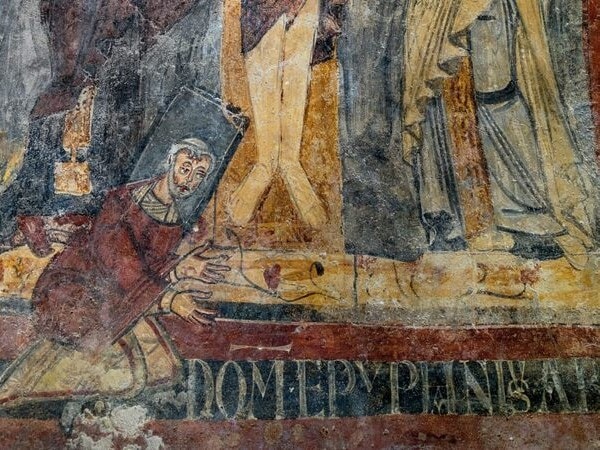
The paintings, dating back to the first half of the 9th century or even older according to recent research, reveal an iconographic project that focuses on Marian and apocalyptic themes, closely connected to the studies of an eminent theologian and abbot of San Vincenzo who lived in the 8th century: Saint Ambrose Autpert, cited by Paul the Deacon as a man of extraordinary erudition and by Pope Benedict XVI as the first great Mariologist of the entire West. In this archaeological context of the Upper Volturno Valley, the Middle Ages presents itself as an era of extraordinary creativity in which humanity, despite challenges and adversities, managed to rise to heights of intense spirituality, intellectuality, knowledge, and artistic splendor.
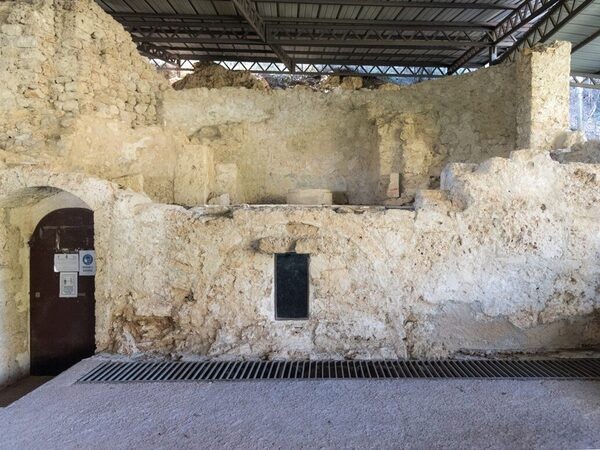
An epigraph rediscovered in San Vincenzo al Volturno reads: “membra sacerdotis licet tumulata sepulchro hoc iaceant Tamfrid spiritus astra petit” (“Although the priest’s limbs may lie in the tomb, the spirit of Tamfrid aspires to the stars”). This inscription embodies all the sweetness, poetry, and art that permeates this historical era; essences often underestimated and still little recognized today for what is called the “Middle Ages.”
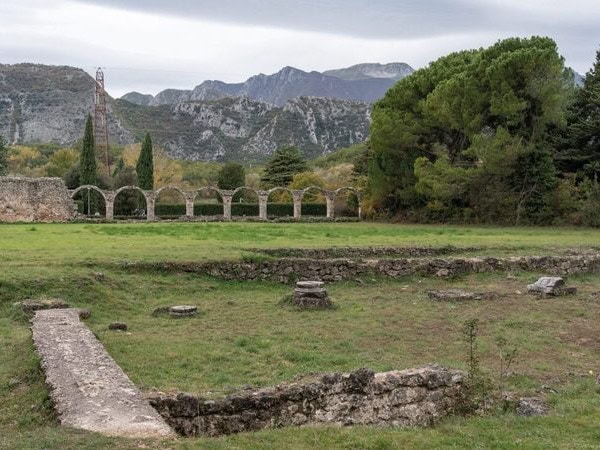
Monumental Complex of Castel San Vincenzo: For guided tours: Tel. 333 6972803 | For information: Molise Regional Museums Directorate
Crypt of Epiphanius: Information and reservations: +39 350 1755970 | in**@**************io.it