
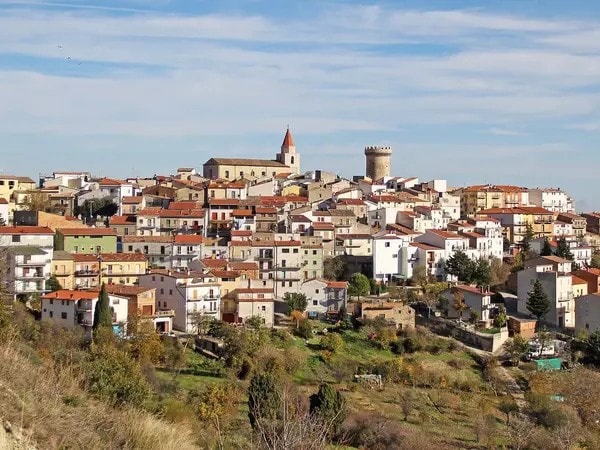
Molise has 136 municipalities (comuni). This month Mootilda maps Colletorto, a hilltop of horizons and heritage.
Rising above rolling wheat fields in eastern Molise, Colletorto is a village where broad horizons meet deep history. From its medieval tower overlooking the Fortore Valley to its centuries-old traditions of farming, craftsmanship, and community celebration, Colletorto offers visitors an authentic glimpse into rural Molise. Here, the pace is unhurried, the views stretch for miles, and every winding street tells a story of resilience, faith, and connection to the land.
Location & Physical Geography
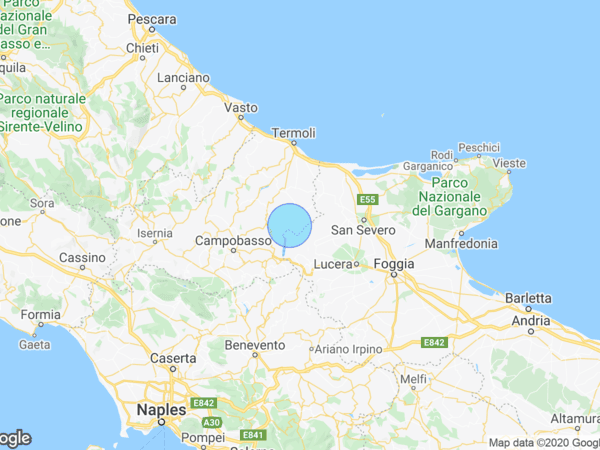
Colletorto is located in the province of Campobasso in eastern Molise, near the border with Puglia. Perched approximately 515 meters (1,690 feet) above sea level, the town commands sweeping views over the Fortore Valley and the gently rolling hills that characterize this agricultural corner of the region.
Its name—believed to derive from the Latin collis tortus, or “twisted hill”—aptly reflects the winding ridge upon which the historic center developed. The surrounding countryside is dominated by wheat fields, olive groves, vineyards, and pastureland, landscapes that have sustained local families for centuries and continue to define the area’s economy and identity.
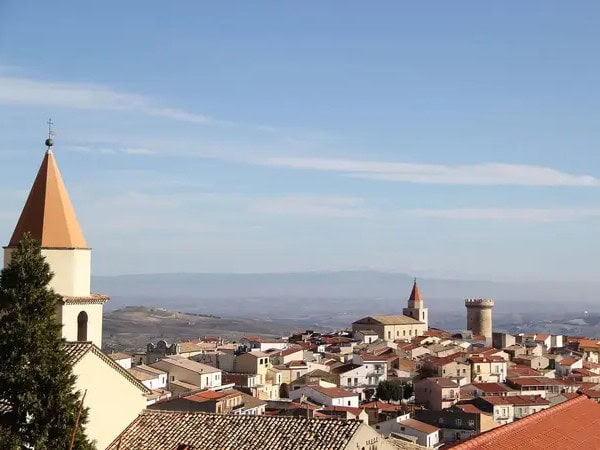
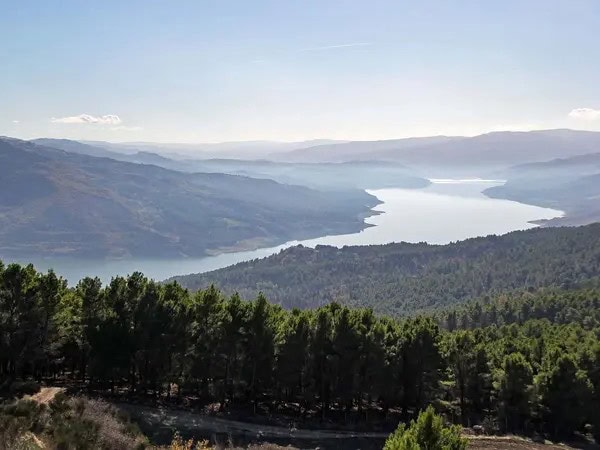
The broad vistas surrounding Colletorto make it one of the best places in Molise to appreciate the region’s quieter beauty, where cultivated fields meet distant mountains beneath expansive skies.
Historical Overview
Like many communities in Molise, Colletorto traces its origins to the medieval period, though the surrounding territory was inhabited long before by Samnite peoples and later influenced by Roman civilization.
The village grew around its defensive hilltop position, providing protection while overlooking important routes through the Fortore Valley. Over the centuries, Colletorto passed through the hands of several noble families, each leaving its mark on the town’s architectural and civic development.
The symbol of this heritage is the imposing Torre Angioina (Angioina Tower), one of the best-preserved medieval towers in Molise. Originally built as part of the town’s fortifications and later modified over successive centuries, it continues to dominate the skyline and serves as a reminder of Colletorto’s strategic importance.
Like many rural Molisan communities, Colletorto experienced significant emigration during the late nineteenth and twentieth centuries. Families departed for North and South America, Australia, and elsewhere in Europe, creating a worldwide diaspora whose descendants continue to return for festivals, family reunions, and celebrations of their ancestral home.
The town has also demonstrated remarkable resilience in the face of natural disasters, particularly following the 2002 Molise earthquake. Restoration efforts preserved many of its historic buildings while strengthening the community’s commitment to protecting its cultural heritage for future generations.
What to See & Do
- Wander the Historic Center
- Colletorto’s historic center is a delight to explore, with narrow stone streets, quiet piazzas, and panoramic viewpoints that reveal the beauty of the surrounding countryside. Walking through its lanes offers a glimpse into daily life that has changed remarkably little over generations.
- Colletorto’s historic center is a delight to explore, with narrow stone streets, quiet piazzas, and panoramic viewpoints that reveal the beauty of the surrounding countryside. Walking through its lanes offers a glimpse into daily life that has changed remarkably little over generations.
- Visit the Angioina Tower
- Standing prominently above the town, the Angioina Tower is Colletorto’s defining landmark. Visitors can appreciate both its medieval architecture and the breathtaking views it offers across the Fortore Valley.
- Standing prominently above the town, the Angioina Tower is Colletorto’s defining landmark. Visitors can appreciate both its medieval architecture and the breathtaking views it offers across the Fortore Valley.
- Discover the Church of San Giovanni Battista
- The Church of San Giovanni Battista serves as Colletorto’s principal parish church and remains at the heart of community life. Its architecture and sacred art reflect centuries of local faith and devotion.
- The Church of San Giovanni Battista serves as Colletorto’s principal parish church and remains at the heart of community life. Its architecture and sacred art reflect centuries of local faith and devotion.
- Enjoy the Panoramic Views
- One of Colletorto’s greatest attractions requires no admission ticket. From numerous points around the village, visitors can enjoy sweeping vistas across eastern Molise, particularly at sunrise and sunset when the surrounding fields glow with changing light.
- One of Colletorto’s greatest attractions requires no admission ticket. From numerous points around the village, visitors can enjoy sweeping vistas across eastern Molise, particularly at sunrise and sunset when the surrounding fields glow with changing light.
- Experience Local Hospitality
- Colletorto exemplifies the warm hospitality for which Molise is known. Whether enjoying a conversation in the piazza, visiting during a community festival, or sharing a meal with locals, visitors quickly discover that the village’s greatest treasure is its people.
Traditions
- Notti Angioine
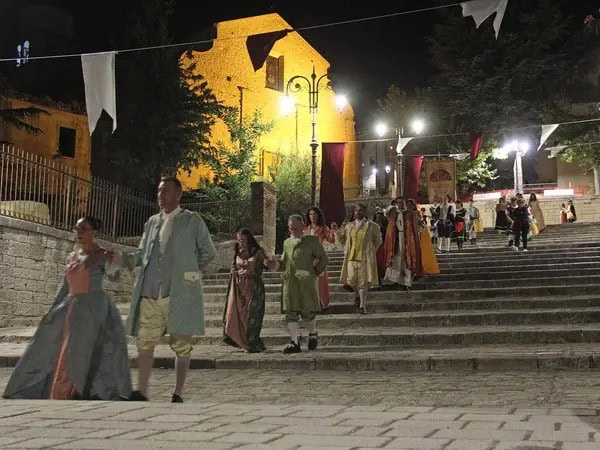
- Each year on August 11 and 12, Colletorto steps back nearly seven centuries during the Notti Angioine, one of Molise’s most celebrated historical reenactments. Now celebrating its 30th edition in 2026, the festival honors Queen Joanna I of Anjou (Giovanna I d’Angiò), who ascended the throne at the age of seventeen and whose legacy remains deeply connected to the town and its iconic Angioina Tower.
The first evening transforms Largo Angioino into a medieval village, where visitors can tour the tower, meet costumed reenactors, try traditional games, watch historical archery demonstrations, enjoy medieval music, and sample local specialties.
On the evening of August 12, Colletorto comes fully to life as nearly 400 costumed participants parade through the historic center before reenacting scenes from the life and reign of Queen Joanna. Flag throwers, musicians, armored knights, falconers, dancers, fire performers, and jesters culminate the celebration with the spectacular Incendio Artistico della Torre Angioina—an artistic “burning” of the tower through fireworks, light, music, and theatrical effects that has become one of Molise’s most unforgettable summer traditions.
- Each year on August 11 and 12, Colletorto steps back nearly seven centuries during the Notti Angioine, one of Molise’s most celebrated historical reenactments. Now celebrating its 30th edition in 2026, the festival honors Queen Joanna I of Anjou (Giovanna I d’Angiò), who ascended the throne at the age of seventeen and whose legacy remains deeply connected to the town and its iconic Angioina Tower.
- The Feast of San Giovanni Battista
- The town’s principal religious celebration on August 29 honors San Giovanni Battista, Colletorto’s patron saint. Processions, music, shared meals, and returning families reflect the enduring importance of faith and community in village life.
- The town’s principal religious celebration on August 29 honors San Giovanni Battista, Colletorto’s patron saint. Processions, music, shared meals, and returning families reflect the enduring importance of faith and community in village life.
- A Living Agricultural Heritage
- Throughout the year, the rhythms of agriculture continue to shape life in Colletorto. Wheat harvests, olive cultivation, and seasonal traditions remain important expressions of the community’s enduring relationship with the land.
Tastes
Colletorto’s cuisine reflects the agricultural abundance of eastern Molise, emphasizing simple ingredients prepared with generations of accumulated knowledge.
Local specialties include:
- Handmade pasta prepared according to family traditions
- Fresh breads baked using local wheat
- Extra virgin olive oil produced from surrounding groves
- Traditional lamb and pork dishes
- Seasonal vegetables and legumes
- Local cheeses and cured meats
- Homemade sweets prepared for religious festivals
Like much of inland Molise, meals in Colletorto celebrate seasonality, generosity, and the pleasure of gathering around the table.
Something Especially Interesting
- A Village Connected Around the World
- Although Colletorto remains a small rural community, its story extends far beyond Molise. Generations of emigrants established vibrant communities abroad while maintaining strong ties to their hometown. Today, many descendants return to reconnect with family, heritage, and the landscapes that shaped earlier generations.
- Although Colletorto remains a small rural community, its story extends far beyond Molise. Generations of emigrants established vibrant communities abroad while maintaining strong ties to their hometown. Today, many descendants return to reconnect with family, heritage, and the landscapes that shaped earlier generations.
- The Tower That Watches Over the Valley
- Few landmarks define a community as completely as Colletorto’s Angioina Tower. Visible from miles away, it has watched over the village through centuries of change while remaining a symbol of continuity and resilience.
Mootilda’s Take 🐄
Colletorto reminds us that some of the most memorable places aren’t defined by famous monuments or crowded streets—they’re defined by perspective. Stand beside the ancient tower, look out across the endless fields of eastern Molise, and it’s easy to understand why generations have carried this village with them wherever life has taken them.
References
- (n.d.). Colletorto. https://molise.guideslow.it/localita/colletorto/
- Turismo in Molise. (n.d.). https://turismoinmolise.com/colletorto/
- Visit Molise. (n.d.). https://www.visitmolise.eu/scheda-localita/-/d/dms/1564703/colletorto
- Wikipedia contributors. (n.d.). Wikipedia. https://en.wikipedia.org/wiki/Colletorto
- Wikipedia contributors. (n.d.). Wikipedia. https://it.wikipedia.org/wiki/Colletorto