
Molise has 136 municipalities (comuni). This month Mootilda maps Termoli, where Molise meets the sea.
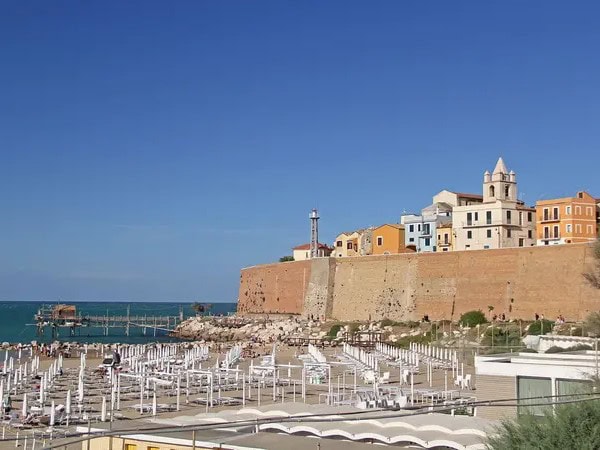
Perched along the Adriatic coast, crowned by a medieval castle, and wrapped in some of the most beautiful beaches in southern Italy, Termoli is where Molise turns its face toward the sea. Equal parts fishing village, historic port, seaside resort, and cultural hub, it offers visitors a different side of the region—one shaped by salt air, maritime traditions, and centuries of exchange across the Adriatic. Whether you come for the beaches, the history, the food, or the ferry ride to the Tremiti Islands, Termoli reminds visitors that Molise’s story has always been connected to the wider Mediterranean world.
Location & Physical Geography
Termoli sits on the Adriatic coast in the province of Campobasso and serves as Molise’s principal seaside destination and most important port city.
Unlike the mountain villages and river valleys that define much of the region, Termoli occupies a dramatic coastal setting where a rocky promontory extends into the Adriatic Sea. Upon this natural outcrop rises the town’s historic center, creating one of Molise’s most recognizable landscapes.
The city is known for its long sandy beaches, clear waters, and favorable climate, making it a popular destination during the summer months. Its port serves as both a fishing harbor and a transportation hub, providing connections to the nearby Tremiti Islands.
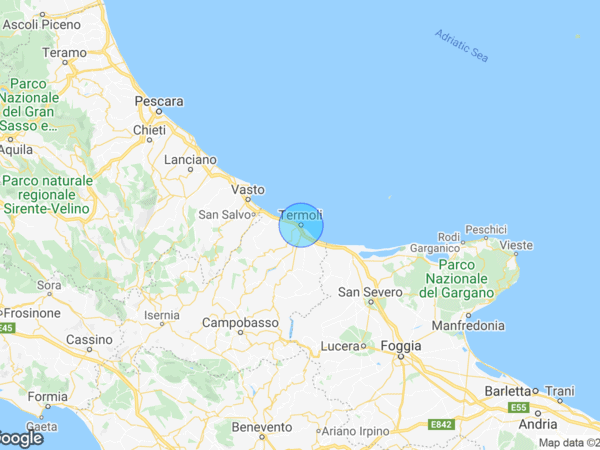
For centuries, Termoli’s position on the Adriatic made it a gateway between Italy and the Balkans, connecting Molise to broader networks of trade, migration, and cultural exchange.
Historical Overview
The origins of Termoli stretch deep into antiquity, though the city achieved particular importance during the medieval period.
Its strategic coastal position made it both prosperous and vulnerable. Throughout its history, the city faced repeated threats from pirates and foreign incursions, prompting the construction of defensive walls and fortifications that still define the historic center today.
The most iconic of these is the imposing Castello Svevo, which dominates the promontory overlooking the sea. While earlier fortifications likely existed, much of the current structure dates to the period of Frederick II of Swabia in the 13th century and became a cornerstone of the city’s defensive network.
The walled old town, known locally as the Borgo Antico, preserves much of its medieval character, with narrow lanes, stone houses, and panoramic sea views that reveal why this location was so strategically valuable.
Termoli also holds a special place in modern Italian history. During the Second World War, the city was the site of the Battle of Termoli in October 1943, when Allied forces landed and fought German troops for control of this vital Adriatic position. The battle formed part of the broader Allied advance northward through Italy and left a lasting mark on the community.
Today, Termoli balances its historical identity with its role as one of Molise’s most vibrant cultural and tourism centers.
What to See & Do
- Explore the Borgo Antico
- Termoli’s historic center is among the most picturesque in southern Italy. Encircled by medieval walls and perched above the Adriatic, it invites visitors to wander through narrow alleys, hidden piazzas, and centuries-old streets where everyday life continues much as it has for generations.
- Termoli’s historic center is among the most picturesque in southern Italy. Encircled by medieval walls and perched above the Adriatic, it invites visitors to wander through narrow alleys, hidden piazzas, and centuries-old streets where everyday life continues much as it has for generations.
- Discover Termoli Sotterranea
- Beneath the streets of the Borgo Antico lies Termoli Sotterranea, an archaeological route that reveals centuries of the city’s hidden history. Excavations beneath the Cathedral of San Basso uncovered remnants of earlier structures, medieval foundations, and evidence of the communities that occupied the site long before the modern city emerged. The underground spaces offer a fascinating glimpse into the layers of history that have shaped Termoli, reminding visitors that every stone in the old town rests upon centuries of human experience.
- Beneath the streets of the Borgo Antico lies Termoli Sotterranea, an archaeological route that reveals centuries of the city’s hidden history. Excavations beneath the Cathedral of San Basso uncovered remnants of earlier structures, medieval foundations, and evidence of the communities that occupied the site long before the modern city emerged. The underground spaces offer a fascinating glimpse into the layers of history that have shaped Termoli, reminding visitors that every stone in the old town rests upon centuries of human experience.
- Visit the Castello Svevo
- The city’s most recognizable landmark, the Castello Svevo offers a glimpse into Termoli’s medieval past while providing spectacular views of the coastline and sea.
- The city’s most recognizable landmark, the Castello Svevo offers a glimpse into Termoli’s medieval past while providing spectacular views of the coastline and sea.
- Discover the Cathedral of San Basso
- Located within the old town, the Cathedral of San Basso is one of the most important religious monuments in Molise. Built in Romanesque style and dedicated to the city’s patron saint, it houses the relics of both San Basso and Saint Timothy, making it a site of both artistic and spiritual significance.
- Located within the old town, the Cathedral of San Basso is one of the most important religious monuments in Molise. Built in Romanesque style and dedicated to the city’s patron saint, it houses the relics of both San Basso and Saint Timothy, making it a site of both artistic and spiritual significance.
- Relax on the Beaches
- Termoli’s beaches are among the finest on the Adriatic coast. Visitors can enjoy long stretches of sand, clear waters, and a lively seaside atmosphere that contrasts beautifully with the quieter inland landscapes of Molise.
- Termoli’s beaches are among the finest on the Adriatic coast. Visitors can enjoy long stretches of sand, clear waters, and a lively seaside atmosphere that contrasts beautifully with the quieter inland landscapes of Molise.
- Take a Ferry to the Tremiti Islands
- For many travelers, Termoli serves as the gateway to the spectacular Tremiti Islands, whose crystal-clear waters and dramatic coastal scenery make them one of southern Italy’s most beloved island destinations.
- For many travelers, Termoli serves as the gateway to the spectacular Tremiti Islands, whose crystal-clear waters and dramatic coastal scenery make them one of southern Italy’s most beloved island destinations.
- Experience Molise Through Turismol
- Among the organizations helping visitors discover the region is Turismol, whose excursions, experiences, and cultural initiatives introduce travelers to both the well-known and hidden corners of Molise. Their work reflects the growing movement toward immersive, locally rooted tourism experiences throughout the region.
- Among the organizations helping visitors discover the region is Turismol, whose excursions, experiences, and cultural initiatives introduce travelers to both the well-known and hidden corners of Molise. Their work reflects the growing movement toward immersive, locally rooted tourism experiences throughout the region.
- Encounter Ephemeral Art
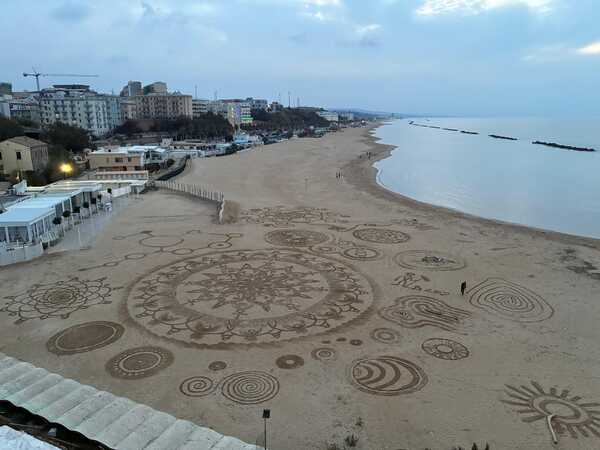
- Visitors may also encounter the work of local artist Agostino Senese, known for creating striking temporary works using natural materials such as stones, sand, and elements of the coastal landscape. His rock-balancing sculptures and sand mandalas invite reflection on impermanence, beauty, and humanity’s relationship with nature.
- Visitors may also encounter the work of local artist Agostino Senese, known for creating striking temporary works using natural materials such as stones, sand, and elements of the coastal landscape. His rock-balancing sculptures and sand mandalas invite reflection on impermanence, beauty, and humanity’s relationship with nature.
- Explore Virtually Before You Arrive
- For those planning a future visit, Molise Wow‘s virtual tours offer an opportunity to experience portions of Termoli’s historic center and coastline before setting foot in the city.
Traditions
- The Feast of San Basso
- The most important celebration in Termoli is the Feast of San Basso, held each summer in honor of the city’s patron saint.
The celebration is famous for its maritime procession, during which a statue of San Basso is carried aboard a fishing boat and escorted across the waters by a flotilla of decorated vessels. The festival combines faith, community, music, and spectacle in a way that beautifully reflects Termoli’s enduring connection to the sea.
- The most important celebration in Termoli is the Feast of San Basso, held each summer in honor of the city’s patron saint.
- Maritime Heritage
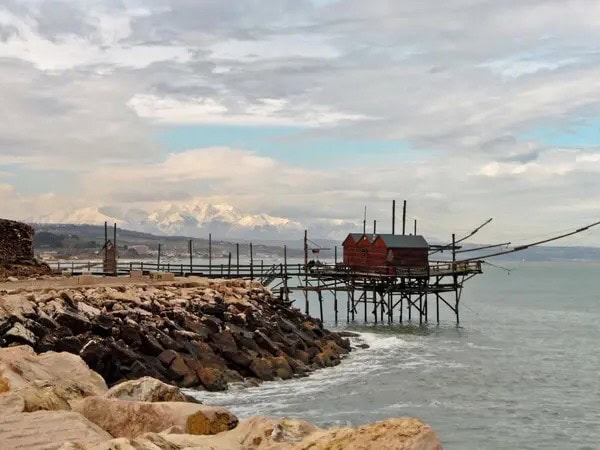
- Fishing remains central to the city’s identity. Traditional fishing boats, local seafood culture, and generations of maritime knowledge continue to shape life in Termoli today.
Tastes
Termoli’s cuisine reflects centuries of interaction between sea and land.
Notable specialties include:
- Brodetto di pesce, a traditional Adriatic fish stew
- Fresh Adriatic seafood prepared simply to highlight local ingredients
- Homemade pasta dishes featuring both seafood and inland Molisan influences
- Local olive oils and wines from the surrounding countryside
- Traditional pastries enjoyed during festivals and family celebrations
Few places in Molise capture the meeting of maritime and inland culinary traditions as completely as Termoli.
Restaurant Recommendations
- Zi Peppino
- A longtime local favorite known for fresh seafood and traditional coastal cuisine.
- A longtime local favorite known for fresh seafood and traditional coastal cuisine.
- Ristorante Don Giovanni – Steak House
- A popular choice for high-quality meats and a contemporary dining experience.
- A popular choice for high-quality meats and a contemporary dining experience.
- Salsedine Cucina di Mare e Pizza
- A beloved seaside destination showcasing the flavors of the Adriatic in an elegant waterfront setting.
- A beloved seaside destination showcasing the flavors of the Adriatic in an elegant waterfront setting.
- Svevia
- A well-regarded restaurant combining local ingredients, regional traditions, and refined presentation.
Something Especially Interesting
- A City Built Around a Secret
- One of Termoli’s most intriguing landmarks is the Rejecelle, often described as one of Italy’s narrowest alleys. Measuring just over forty centimeters wide at its narrowest point, it has become one of the city’s most photographed corners.
- One of Termoli’s most intriguing landmarks is the Rejecelle, often described as one of Italy’s narrowest alleys. Measuring just over forty centimeters wide at its narrowest point, it has become one of the city’s most photographed corners.
- Molise’s Maritime Soul
- If inland villages reveal Molise’s pastoral identity, Termoli reveals its maritime one. Together they tell the complete story of a region shaped by mountains, rivers, and sea.
- If inland villages reveal Molise’s pastoral identity, Termoli reveals its maritime one. Together they tell the complete story of a region shaped by mountains, rivers, and sea.
- A Living Gateway
- For centuries people arrived in Termoli from across the Adriatic. Today, visitors continue that tradition, discovering a coastal city that serves as both introduction and invitation to the wider region.
Mootilda’s Take 🐄
Termoli feels like a place where every direction offers a different story. Turn toward the sea and you’ll find fishermen, ferries, and endless horizons. Turn toward the old town and you’ll find centuries of history tucked behind stone walls. It is a reminder that Molise has never been just mountains—it has always belonged to the Mediterranean.
References
- GuideSlow. (n.d.). Termoli. https://molise.guideslow.it/localita/termoli/
- Molise Wow. (n.d.). Virtual Tour of Termoli. https://www.molisewow.com/virtual-tour-1
- Turismo in Molise. (n.d.). Termoli. https://turismoinmolise.com/termoli/
- (n.d.). Experiences in Molise. https://www.turismol.it/
- Visit Molise. (n.d.). Termoli. https://www.visitmolise.eu/scheda-localita/-/d/dms/1489088/termoli
- Wikipedia contributors. (n.d.). Termoli. https://en.wikipedia.org/wiki/Termoli
- Wikipedia contributors. (n.d.). Termoli. https://it.wikipedia.org/wiki/Termoli