
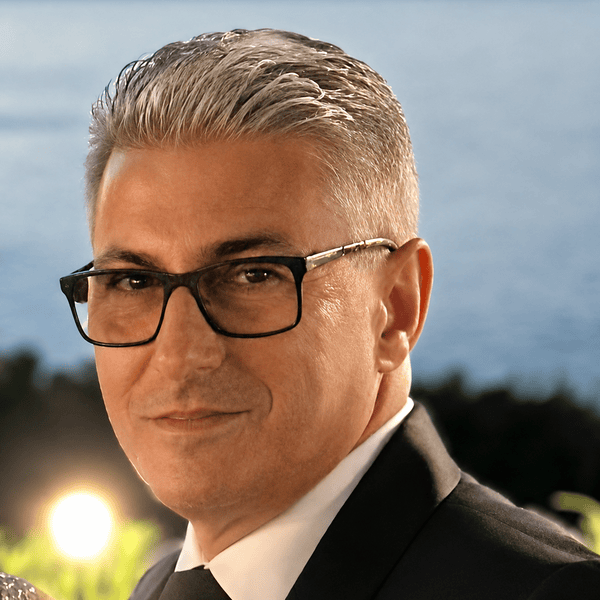
A Conversation with Massimo Porfirio

Each month we will share perspectives on Molise from those who live it and love it, and our interviews will often be a chance for language practice. This month we chatted with our good friend and partner, Massimo Porfirio.

After spending part of his childhood in Bristol, Pennsylvania—where his father lived as an immigrant for twenty years—Massimo has now been working in the tourism industry for 37 years as an administrative assistant at a hotel in Termoli, where he has been the invaluable sine qua non for many MIS faculty-led visits (and even volunteered as a storyteller for our Community Conversation event in 2023).

He lives in Roccavivara, where, since 2019, together with his wife Simonetta, he has been working to promote tourism in his hometown through Locazione Turistica Arcobaleno, managing a total of 17 guest beds spread across several small houses located in the historic center.

Massimo is convinced that tourism can bring about a positive turning point even for a small and still little-known region like Molise, characterized mainly by tiny villages. In his view, the true wealth of this region lies precisely in its unspoiled nature, the authenticity of its places, and its laid-back pace of life.

For this reason, he sincerely hopes that young people from Molise, too, can gain a greater awareness of their homeland’s potential, learning first and foremost to believe in themselves and, subsequently, to invest in the resources and opportunities offered by the region where they were born.

Molise IS; what IS Molise to you?

Molise represents authenticity, resilience, and cultural identity. To me, it is a region that preserves the most genuine aspects of Italian heritage through its traditions, communities, cuisine, and connection to the land. It also reflects the value of simplicity, sustainability, and human relationships in a world that is increasingly fast-paced and standardized.

What is your favorite thing about Molise?

My favorite thing about Molise is its authenticity. Life there feels genuine and connected to people, traditions, and the landscape in a way that is becoming rare. In small places like Roccavivara, there is a strong sense of community — people know and support each other, and everyday life feels more personal and human.
 
I also love the balance between nature and simplicity. In a short distance, you can experience mountains, hills, countryside, and the Adriatic coast, all without the crowds or fast pace of bigger tourist destinations. Molise teaches you to appreciate quiet moments, family traditions, and the value of slowing down.

What is a challenge facing Molise (and/or Roccavivara specifically)?

One of the biggest challenges facing Molise, and especially small villages like Roccavivara, is depopulation. Many young people leave to study or find work in larger cities or abroad, which means small communities are gradually shrinking and aging.
 
This creates several connected problems: fewer local services, fewer job opportunities, and the risk of traditions and community life becoming weaker over time. In places like Roccavivara, there is also the challenge of preserving the identity and culture of the village while still creating modern opportunities that encourage people to stay or return.
 
At the same time, Molise has many strengths — strong community ties, natural beauty, and a slower quality of life — so the challenge is finding a balance between preserving these qualities and creating a sustainable future for younger generations.

Tell readers about your specific context/life in Molise.

I was born and raised in Roccavivara, a small village in the region of Molise in southern Italy. Life here is deeply connected to community, tradition, and nature. Growing up in Molise means living in a place where people still know each other personally, where local traditions remain part of daily life, and where the rhythm of life is slower and more human than in larger cities.
 
At the same time, living in a small region also means witnessing some of its challenges, especially depopulation and the gradual loss of opportunities for younger generations. Many people leave Molise for work or study, and small villages risk becoming quieter every year. This reality made me appreciate even more the beauty and authenticity of the place where I grew up.
 
That appreciation is what inspired me and my wife to open the Locazione Turistica Arcobaleno, a small tourism business composed of 3 accommodations. We wanted to create a way for visitors to experience the real Molise — not only as tourists, but as guests welcomed into the atmosphere, culture, and slower pace of local life.

Our goal was to offer a simple and authentic experience connected to the landscape, traditions, and hospitality of the region.
 
Through the Locazione Turistica Arcobaleno, we hope people can discover the side of Molise that we grew up with: peaceful villages, genuine human connections, beautiful natural surroundings, and the feeling of being part of a place that still values simplicity and community.
 

What is your top recommendation to visit in Molise?

My top recommendation in Molise would be visiting the inland villages, especially smaller places like Roccavivara, because they show the quieter and more traditional side of the region. There you can experience local festivals, traditional food, and the strong sense of community that defines much of Molise.
 
I would also recommend the area around Termoli. It combines some of the best parts of the region: the Adriatic Sea, a beautiful historic old town, local seafood culture, and a relaxed atmosphere that feels authentic rather than overcrowded. Walking through the narrow streets of the old town and along the castle walls at sunset is one of the most memorable experiences in Molise.
 
If someone wants to understand the true character of Molise, I think the best approach is to experience both the coast and the interior: the sea in Termoli and the slower village life in the hills and mountains. Together, they represent the real spirit of the region.

Is there one piece of advice Molise has taught you or embodied for you?

One piece of advice that Molise has taught me is that not everything valuable has to be fast, loud, or constantly changing. Living in a small place like Roccavivara teaches you to appreciate simplicity, patience, and human connection.
 
Molise embodies the idea that a meaningful life can be built through community, traditions, and small everyday moments rather than constant competition or urgency. People here often value relationships, time spent together, and a strong connection to their roots.
 
Growing up in this environment taught me that being grounded is important: knowing where you come from can give you stability even when life changes or takes you elsewhere.

Leave a Comment

Your email address will not be published. Required fields are marked *